
Concrete Driveways
The first thing anyone sees, poured to last decades.
A driveway is structural work wearing a decorative face. It carries vehicle loads across soil that expands and contracts by inches over a Texas year, and when a driveway fails, the cause is almost always what happened under the slab rather than what happened on top of it.
So we build from the bottom up. Full depth removal, soft spots dug out, subgrade moisture conditioned and compacted in lifts, a graded base, and rebar set to city code so it actually sits in the middle of the pour. Thickness is set for what will really park there, including the trailer and the delivery truck, and the approach at the street is poured to municipal standard.
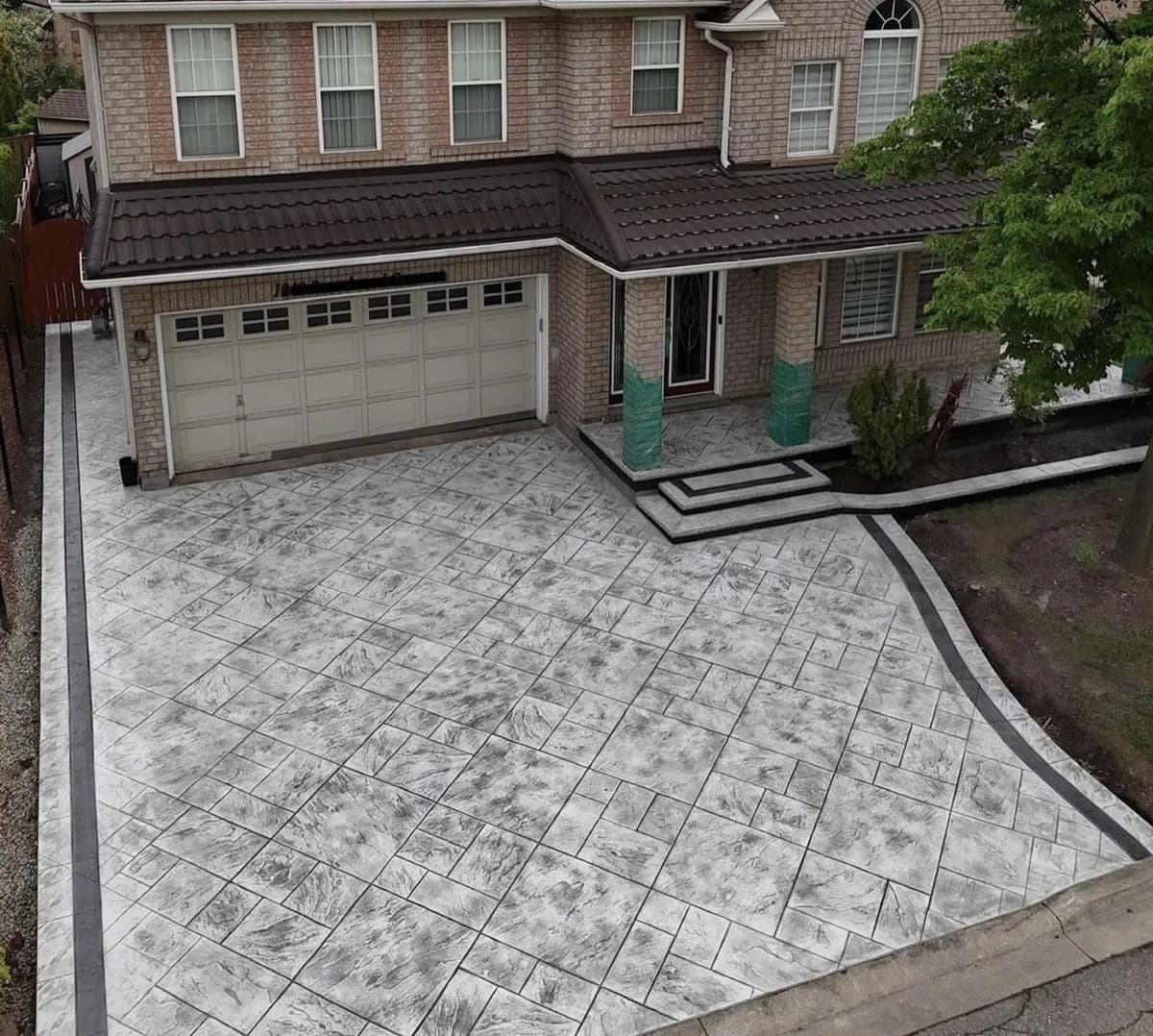
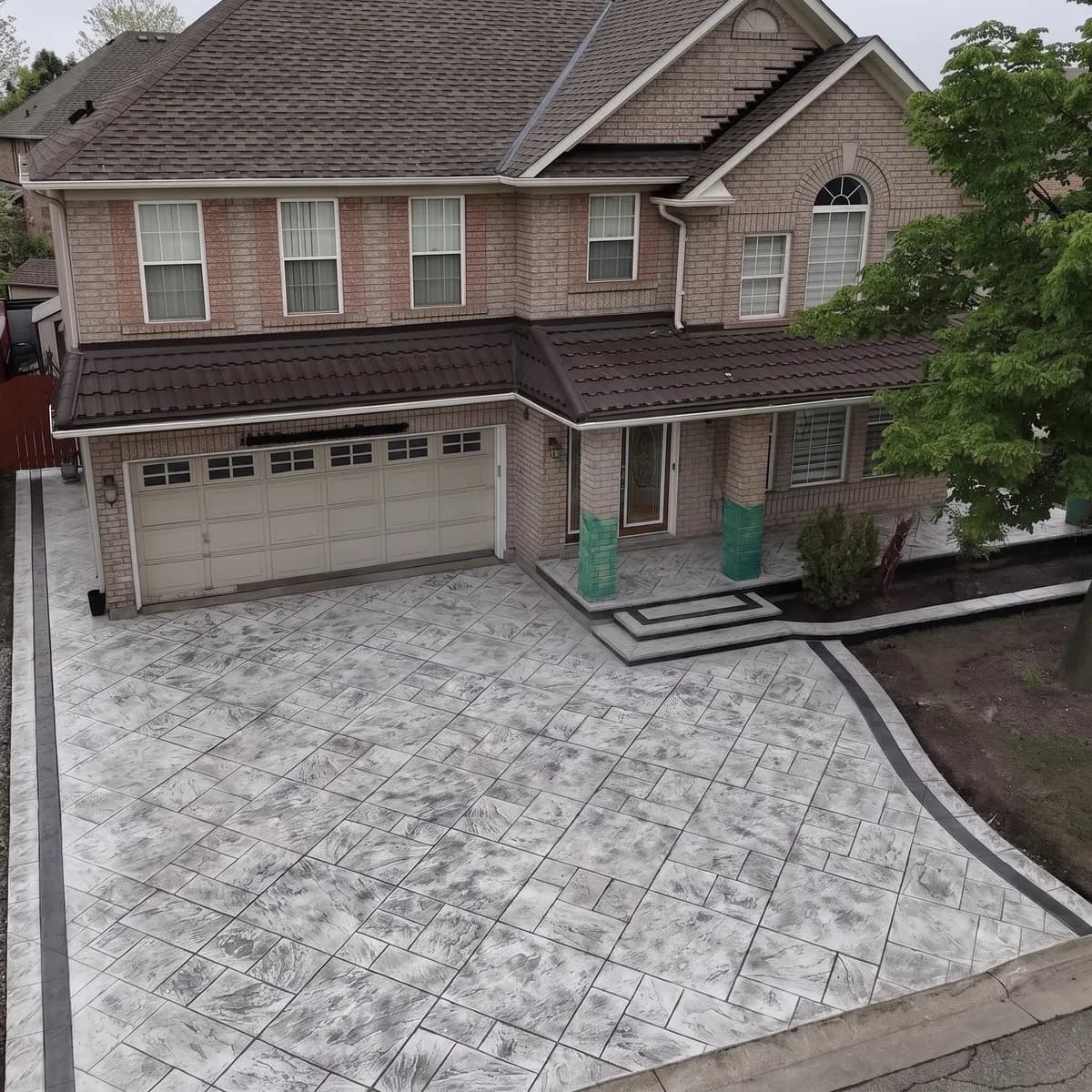
Above that, you have choices. A clean broom finish reads crisp and modern. A stamped or exposed border band gives the front elevation a frame and picks up the stone on the house. Widened pads, turnarounds, and ribbon extensions solve the everyday problem of one car always sitting on the grass.
What’s Included
Built into every driveways project.
Engineered thickness and rebar
Slab depth and rebar layout sized for the vehicles that will actually use the drive, set to city code so the reinforcement stays where it does its work.
Prepared subgrade
Old concrete removed in full, soft spots excavated, subgrade moisture conditioned and compacted in lifts before any base material goes down.
Drainage and grade
Falls set so water leaves the slab and the foundation, with area drains or a trench drain added where the site genuinely needs one.
Deliberate joint layout
Control joints planned on paper, cut at the right depth and timing, and aligned with garage bays and slab edges so they look intended.
Finish options
Broom, salt, exposed aggregate, or a hand tooled stamped border band, with integral color available across the field or on the band alone.
Approach to city standard
Street approaches and sidewalk sections poured to municipal specification, with the permit pulled and the inspection coordinated by us.
How It Works
From consultation to walkthrough.
- 01
Free consultation and design
We measure the drive, check grades and drainage, ask what parks there and how often, then give you a written price with the finish and joint layout drawn.
- 02
Permits and scheduling
City permits for the approach go in, utility locates are called, and we schedule around your vehicles so you are never blocked in longer than a pour requires.
- 03
Demo, prep, and pour
Removal and haul off, subgrade work, forms, and rebar, then a continuous placement per section with a finishing crew sized to the pour.
- 04
Cure and return to service
Foot traffic in a couple of days, passenger vehicles at seven, heavy loads at twenty eight. We give you those dates in writing before we leave.
Questions
Concrete Driveways FAQs
How long until I can park on a new driveway?
Passenger vehicles after seven days, and heavy trucks, trailers, or an RV at twenty eight days once the concrete has reached full design strength. Driving on it early is the single most common way a good driveway gets damaged.
How thick should a residential driveway be?
Four inches over a properly prepared base handles ordinary passenger cars. We pour five to six inches with rebar wherever trucks, trailers, or an RV are part of the picture, and we thicken the edges and the approach regardless.
Can you widen my driveway instead of replacing it?
Often, yes. A parking pad or a widened ribbon can be doweled into the existing slab and joint matched so the addition looks planned rather than added. If the existing drive is already failing, replacement is the honest answer and we will say so.
Do I need a permit to replace a driveway?
The apron at the street almost always requires a city permit and an inspection, and some cities require one for the full drive. We pull whatever the city asks for and coordinate the inspection.
Free Consultation & Design
Ready To Start Your Project?
Every project starts with a free consultation and design. We walk your yard, take the measurements, draw the space, and hand you a written price — at no cost and no obligation.